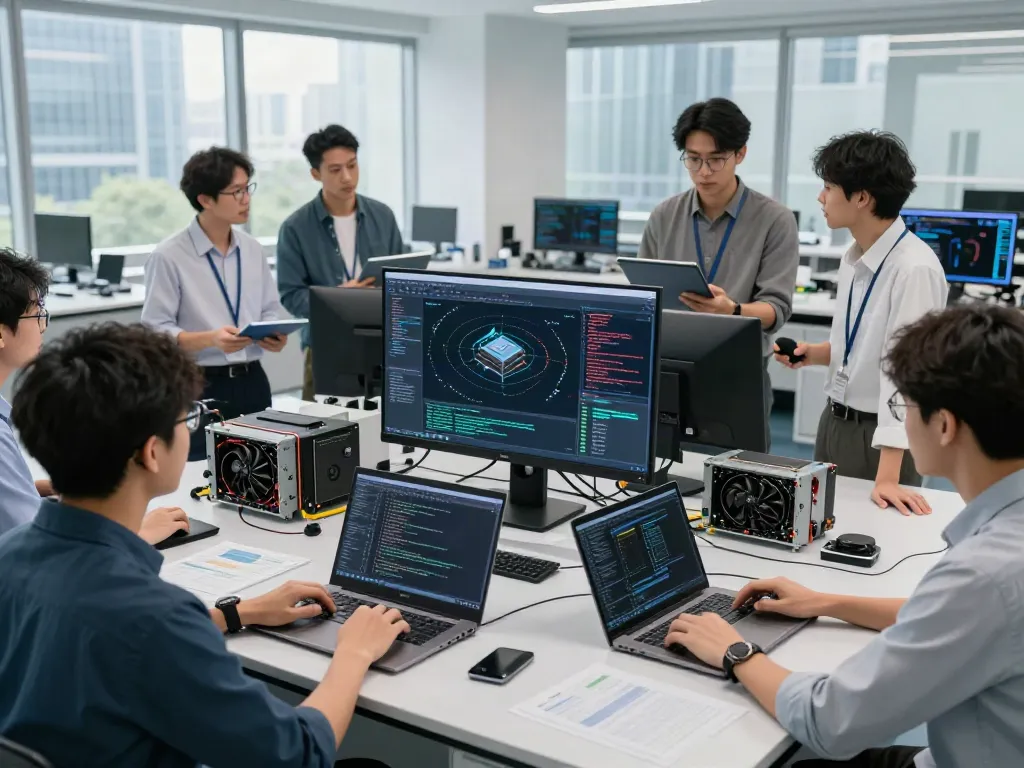
Understanding GPU Computing and Its Role in AI
In today’s rapidly evolving technology landscape, the demand for efficient computation is greater than ever, especially as industries pivot towards artificial intelligence (AI) and machine learning (ML) applications. At the heart of AI lies GPU computing, a technology that leverages the parallel processing capabilities of Graphics Processing Units (GPUs) to perform computations at unprecedented speeds. This article will explore the integral role of GPU computing in AI, particularly its contribution to the AI Token Economy.
What is GPU Computing?
GPU computing refers to the use of a GPU to perform computation tasks that are traditionally handled by the Central Processing Unit (CPU). The architecture of a GPU is designed to handle multiple operations simultaneously, making it especially effective for tasks that require heavy parallel processing. This capability allows GPUs to accelerate data processing tasks across various applications, particularly those involving complex algorithms and large datasets, typical of AI workloads.
Key Benefits of GPU Computing in AI
- Parallel Processing Capability: GPUs can execute thousands of threads concurrently, significantly speeding up the processing time for large datasets.
- Efficiency: Compared to traditional CPUs, GPUs can perform computations more efficiently, resulting in lower energy consumption for equivalent tasks.
- Cost-Effectiveness: By reducing the time required for computations, businesses can optimize their operational costs, particularly in data-intensive environments.
- Flexibility for Diverse Applications: GPU computing is not limited to graphics rendering; it can be used in various fields, including medicine, finance, and robotics.
Comparing GPU vs. CPU for AI Tasks
The primary distinction between GPUs and CPUs lies in their design and processing capabilities. CPUs are optimized for a few, sequential tasks, while GPUs are engineered for handling thousands of tasks simultaneously. This structural difference makes GPUs exponentially better for AI tasks that involve training complex models with vast amounts of data, as they can significantly reduce the time to achieve results.
How GPU Computing Powers the AI Token Economy
As industries increasingly adopt AI technologies, the demand for robust computational resources has surged, creating a direct correlation between GPU computing and the AI Token Economy. The AI Token Economy refers to a system where AI services and computations are measured in tokens, facilitating transactions based on computational power and efficiency.
AI Workloads and GPU Efficiency
AI workloads vary significantly, from data preprocessing and training to inference tasks. GPUs excel in these environments due to their parallel processing architecture, which is vital for handling the large-scale calculations required in AI. By distributing tasks among multiple processing cores, GPUs ensure efficient energy use and operational speed, ultimately enhancing the performance of AI applications.
Impact of Energy Consumption on AI Performance
Energy consumption is a critical factor in the performance and sustainability of AI operations. GPUs are designed to use energy more efficiently than traditional computing units, which is essential for large-scale AI deployments. As businesses strive to lower their carbon footprint, optimizing energy usage through efficient GPU computing becomes increasingly important, providing a sustainable solution for powering AI initiatives.
Token-Metered AI Services Explained
Token-metered services enable businesses to pay for computing resources based on their actual usage rather than fixed costs. This approach aligns with the operational needs of AI applications, allowing for scalable and flexible resource allocation. By leveraging GPU computing, companies can ensure they only use and pay for the computational power they require, leading to more sustainable business practices.
Selecting the Right GPU Computing Solution
Choosing the appropriate GPU computing solution is essential for successfully integrating AI technologies into business operations. Various factors come into play, including power plans, scalability, and cost management, which can significantly impact the overall effectiveness of AI implementations.
Choosing Between Power Plans for AI Infrastructure
When selecting a power plan, organizations need to evaluate their specific computing needs and budget. Different plans offer varying levels of power access and scalability, impacting how effectively an enterprise can leverage GPU capabilities for AI tasks. Understanding these distinctions can help in choosing the best fit for your operational requirements.
Scalability and Flexibility in GPU Computing
Scalability is a crucial consideration in GPU computing, especially as businesses grow and their computational needs evolve. GPU infrastructures should provide the ability to scale resources seamlessly, accommodating increasing workloads without significant downtime or capital expenditures. Flexibility in scaling allows organizations to adapt to changing demands and market conditions effectively.
Cost Management Strategies for AI Operations
Implementing cost management strategies is vital for organizations looking to optimize their AI operations. By employing token-based billing models, businesses can directly correlate their computing costs to actual usage, ensuring a more predictable and manageable budget. Additionally, leveraging cloud-based GPU resources can eliminate the need for heavy upfront investments in hardware.
Challenges in GPU Computing for AI Applications
Despite its numerous advantages, GPU computing presents various challenges that organizations must navigate to harness its full potential for AI applications. Identifying and addressing these challenges is critical for successful AI integration.
Overcoming Hardware Limitations and Costs
One of the primary challenges of GPU computing is the initial cost of hardware and ongoing maintenance. Although prices for GPUs have decreased over the years, the investment can still be significant, particularly for organizations looking to deploy large-scale AI solutions. Companies must consider the balance between hardware investment and expected return on investment when planning their AI strategies.
Managing Data Bottlenecks and Latency Issues
Data bottlenecks can hinder the performance efficiency of GPU processes if not managed effectively. This issue often arises when data transfer speeds are insufficient to keep up with the processing power of GPUs. To mitigate latency issues, organizations must ensure that their data pipelines are optimized and that they have robust data management solutions in place.
Addressing Environmental Considerations in GPU Operations
As the demand for GPU computing grows, so does the environmental impact of these operations. Organizations must adopt sustainable practices, such as utilizing renewable energy sources for powering their GPU infrastructures. Implementing cooling solutions that reduce energy consumption can also contribute to a smaller environmental footprint.
Future Trends in GPU Computing and AI Development
The future of GPU computing is intrinsically linked to advancements in AI technologies and the evolving landscape of the AI Token Economy. As these sectors develop, several trends are likely to shape their future.
Emerging Technologies in GPU Design
Innovations in GPU architecture are paving the way for more powerful and efficient computing systems. Future GPUs may feature enhanced capabilities such as improved energy efficiency, advanced cooling technologies, and integrated artificial intelligence for optimizing processing tasks. These advancements will facilitate even more sophisticated AI applications.
Predictions for the AI Token Economy in 2026
As we look toward 2026, the AI Token Economy is expected to mature significantly. The integration of decentralized finance (DeFi) principles may lead to more robust tokenized models for AI services, allowing for broader access and participation from various stakeholders. Additionally, businesses that understand and leverage GPU computing will likely hold a competitive edge in this evolving landscape.
Innovative Applications of GPU Computing in Various Industries
Looking ahead, the applications of GPU computing are likely to expand across various sectors. Industries such as healthcare, finance, and entertainment are expected to leverage GPU technology for tasks ranging from predictive analytics to creative content generation. The versatility of GPU computing will continue to open new avenues for innovation.
What is GPU computing?
GPU computing is the practice of utilizing Graphics Processing Units (GPUs) to handle complex computational tasks, particularly those requiring high levels of parallel processing.
Why is GPU computing more efficient than CPU?
GPU computing is generally more efficient than CPU computing due to its ability to execute thousands of parallel threads, making it ideal for data-intensive tasks such as AI and machine learning.
How can businesses leverage GPU computing in 2026?
Businesses can leverage GPU computing in 2026 by adopting GPU-based solutions for AI, optimizing their operations for real-time analytics, and utilizing tokenized payment models to manage costs effectively.
What challenges do companies face in adopting GPU technology?
Companies may face challenges in adopting GPU technology, including high initial costs, the need for specialized knowledge, and potential data management bottlenecks.
How can I start with GPU computing for AI projects?
To start with GPU computing for AI projects, businesses should evaluate their computational needs, select a suitable power plan, and consider partnering with established GPU service providers to ensure access to the requisite resources.